Several authors have estimated that the heat wave in Europe in the summer of 2003 was associated with an excess of mortality between 25,000 and 70,000 (Robine et al., 2007) with a greater impact on the ageing of the population and on individuals who live socially isolated (INVS, 2003; Keller, 2015; Salagnac, 2007). These studies have brought to the debate the social implications of the vulnerabilities of the ageing population and the lack of tools and / or individual skills necessary for thermal adaptation indoors.
Future climate projections indicate that heat waves in the Lisbon will not only become more frequent, but also more persistent and that the thermal discomfort due to heat stress will become predominant in summer (AML, 2020).
At the same time, several studies reveal that Portugal will be the oldest country in the European Union in 2050 (Eurostat, 2019) and that elderly people living alone currently represent 12% of households (INE, 2020).
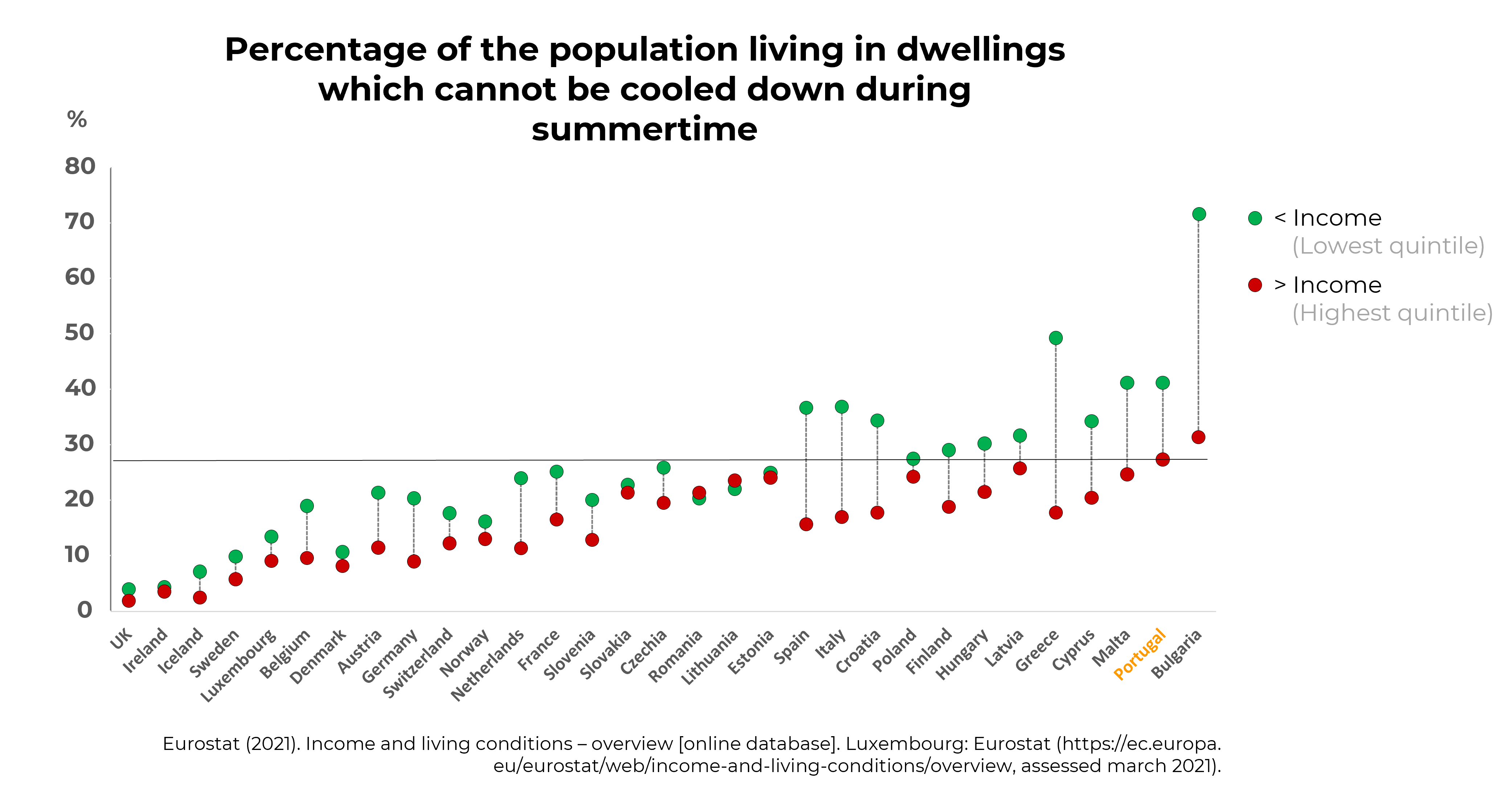
Portugal is the second country in EU where the percentage of the population unable to cool the house during the summer is higher, in fact much higher than other countries with a similar climate, such as Spain or Italy.
IN-HALE project aims to assess the indoor thermal environment during heat events and to identifify facilitators mechanisms and potential barriers influencing the heat adaptation-related behaviours of individuals with 65+ years old in Lisbon.
RESEARCH APPROACHES
